
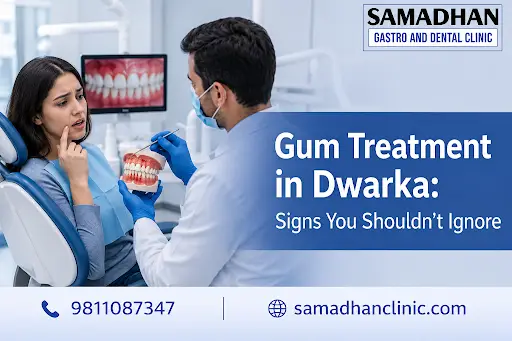
Healthy gums are an important part of a healthy smile, but gum problems can often go unnoticed in the beginning. Bleeding while brushing, swollen gums, persistent bad breath, or tooth sensitivity may seem like small concerns, but they can sometimes be early signs of a gum condition.
At Samadhan Clinic in Dwarka, Dr. Rupal Agrawal, Dental Surgeon, Endodontist and Implantologist, provides comprehensive dental care with experience in root canal treatment, dental implants, and smile-related procedures. Her approach focuses on understanding the cause of a dental problem before recommending the right treatment.
If you have been noticing changes in your gums, understanding the signs you need gum treatment can help you take action at the right time.
What Is Gum Disease?
Gum disease is an inflammation or infection affecting the gums and the tissues supporting your teeth. It commonly begins when plaque builds up around the teeth and gumline.
In its early stage, it is generally known as gingivitis. If left untreated, it can progress to periodontitis, which may affect the tissues and bone supporting the teeth.
This is why recognizing the early symptoms of gum disease is important, even if you are not experiencing significant pain.
Signs You Need Gum Treatment
Gum problems do not always cause obvious discomfort. Sometimes, the first warning signs are changes you notice during everyday activities like brushing or eating.
1. Bleeding While Brushing or Flossing
Bleeding gums are one of the most common signs of gum inflammation. While occasional bleeding can have different causes, regular bleeding should not be considered normal.
If your gums frequently bleed while brushing or flossing, a dental examination can help identify the reason.
2. Red, Swollen or Tender Gums
Healthy gums are generally firm and pink. If your gums become red, swollen, or tender, it may indicate inflammation.
Plaque and tartar buildup can irritate the gums, and persistent inflammation may require professional dental care.
3. Persistent Bad Breath
Bad breath can have several causes, but if it continues despite regular brushing and mouth cleaning, it may sometimes be associated with gum problems.
Persistent bad breath along with bleeding or swollen gums is a good reason to schedule a dental check-up.
4. Receding Gums
If your teeth appear longer than they used to be, your gums may be receding. This can expose more of the tooth surface and may lead to increased sensitivity.
Gum recession can be linked to gum disease, aggressive brushing, or other dental factors. Finding the underlying cause is important for preventing further problems.
5. Sensitive or Loose Teeth
Tooth sensitivity can occur for several reasons. However, sensitivity accompanied by gum problems should be checked by a dentist.
If your teeth begin to feel loose, it may indicate that the supporting tissues around them have been affected. This can occur in more advanced stages of gum disease.
What Causes Gum Problems?
Several factors can contribute to gum problems, including:
- Poor or inconsistent oral hygiene
- Plaque and tartar buildup
- Irregular brushing or flossing
- Tobacco use
- Certain medical conditions
- Hormonal changes
- Aggressive brushing
- Delayed dental treatment
Identifying these factors early can help reduce the risk of gum problems becoming more serious.
Gum Treatment in Dwarka
The treatment for gum problems depends on their cause and severity. There is no single treatment that is suitable for every patient.
During a dental consultation, the dentist examines the teeth and gums to understand the condition. Depending on the findings, treatment may include professional cleaning, plaque and tartar removal, oral hygiene guidance, or other periodontal care when required.
At Samadhan Clinic, dental care is supported by modern equipment, including advanced dental chairs, RVG intraoral imaging, laser and rotary systems, and B-class autoclaves.
The dental department also follows proper sterilization practices, with instruments sterilized and stored in individual sealed pouches. This helps maintain a clean and hygienic environment for dental procedures.
Why Early Treatment Matters
Many people wait until gum problems become painful before visiting a dentist. However, gum disease does not always cause significant pain in its early stages.
Getting persistent symptoms checked early can help identify the problem before it progresses and affects the structures supporting your teeth.
Early care can also help you understand how to improve your daily oral hygiene and reduce the chances of recurring gum problems.
How to Keep Your Gums Healthy
Taking care of your gums starts with simple daily habits.
Brush Twice a Day
Brush twice a day using a soft-bristled toothbrush. Clean gently around the gumline without applying excessive pressure.
Clean Between Your Teeth
Flossing or using an appropriate interdental cleaning method helps remove plaque and food particles from areas that your toothbrush may not reach.
Don't Ignore Bleeding
If your gums bleed regularly, do not ignore it. Persistent bleeding can be one of the symptoms of gum disease and should be evaluated.
Avoid Tobacco
Smoking and tobacco use can negatively affect your oral health and increase the risk of gum problems.
Visit Your Dentist Regularly
Routine dental check-ups can help detect gum problems early. Professional cleaning can also remove tartar that cannot be removed effectively through regular brushing.
When Should You Visit a Gum Doctor in Dwarka?
You do not have to wait until your gums start hurting before consulting a dentist.
If you regularly experience bleeding, swelling, redness, persistent bad breath, gum recession, sensitivity, or discomfort while chewing, consider getting your gums examined.
For those searching for a gum doctor in Dwarka, Dr. Rupal Agrawal at Samadhan Clinic can evaluate your symptoms and recommend suitable care based on your dental needs.
Conclusion
Gum problems can start with symptoms that may appear minor, such as occasional bleeding, swelling, or bad breath. However, these changes should not always be ignored.
Recognizing the signs you need gum treatment and seeking professional advice at the right time can help protect your gums and natural teeth. Along with professional dental care, maintaining good oral hygiene and regular dental check-ups can support healthier gums in the long term.
If you are experiencing persistent gum-related concerns and looking for gum treatment in Dwarka, consulting Dr. Rupal Agrawal at Samadhan Clinic can help you understand the cause of your symptoms and the appropriate next steps.
Frequently Asked Questions
1. What are the common symptoms of gum disease?
Common symptoms of gum disease include bleeding gums, redness, swelling, tenderness, persistent bad breath, gum recession, tooth sensitivity, and loose teeth in advanced cases.
2. What are the signs you need gum treatment?
The signs you need gum treatment may include frequent bleeding, swollen or red gums, persistent bad breath, gum recession, pus around the gums, tooth sensitivity, and discomfort while chewing.
3. When should I see a gum doctor in Dwarka?
You should consider visiting a gum doctor in Dwarka if you experience persistent bleeding, swelling, bad breath, gum recession, or other gum-related changes that do not improve with regular oral hygiene.
4. Can gum disease cause loose teeth?
Yes. Advanced gum disease can affect the tissues and bone supporting the teeth, which may eventually lead to tooth mobility or tooth loss.
Other Posts
Cosmetic Dentistry for a Confident Smile
Cosmetic Dentistry is the term that dentists use to describe the dental procedures that are carried out to improve the..

GERD (Acid Reflux): Symptoms, Causes, Treatment
Acid reflux happens when the valve that connects the stomach to the esophagus weakens...